Formats
Covering hybrid and streamed events in Europe: what changed after 2024
Hybrid coverage is no longer a Zoom on a stand. Here's how the production model actually works in European corporate events now.
Amplify editorial team · 3 February 2026 · 7 min read

Hybrid events had a strange life cycle. In 2020 they were the only option. In 2022 they were treated as a downgrade. By 2024 most European corporate organisers had settled on a hybrid model as the default for anything above a certain audience size — but a hybrid model that is very different from an early-pandemic webinar.
This piece describes how hybrid and streamed corporate events are actually produced now, and what a marketing team commissioning coverage should understand about the model.
The production is a broadcast, not a webinar
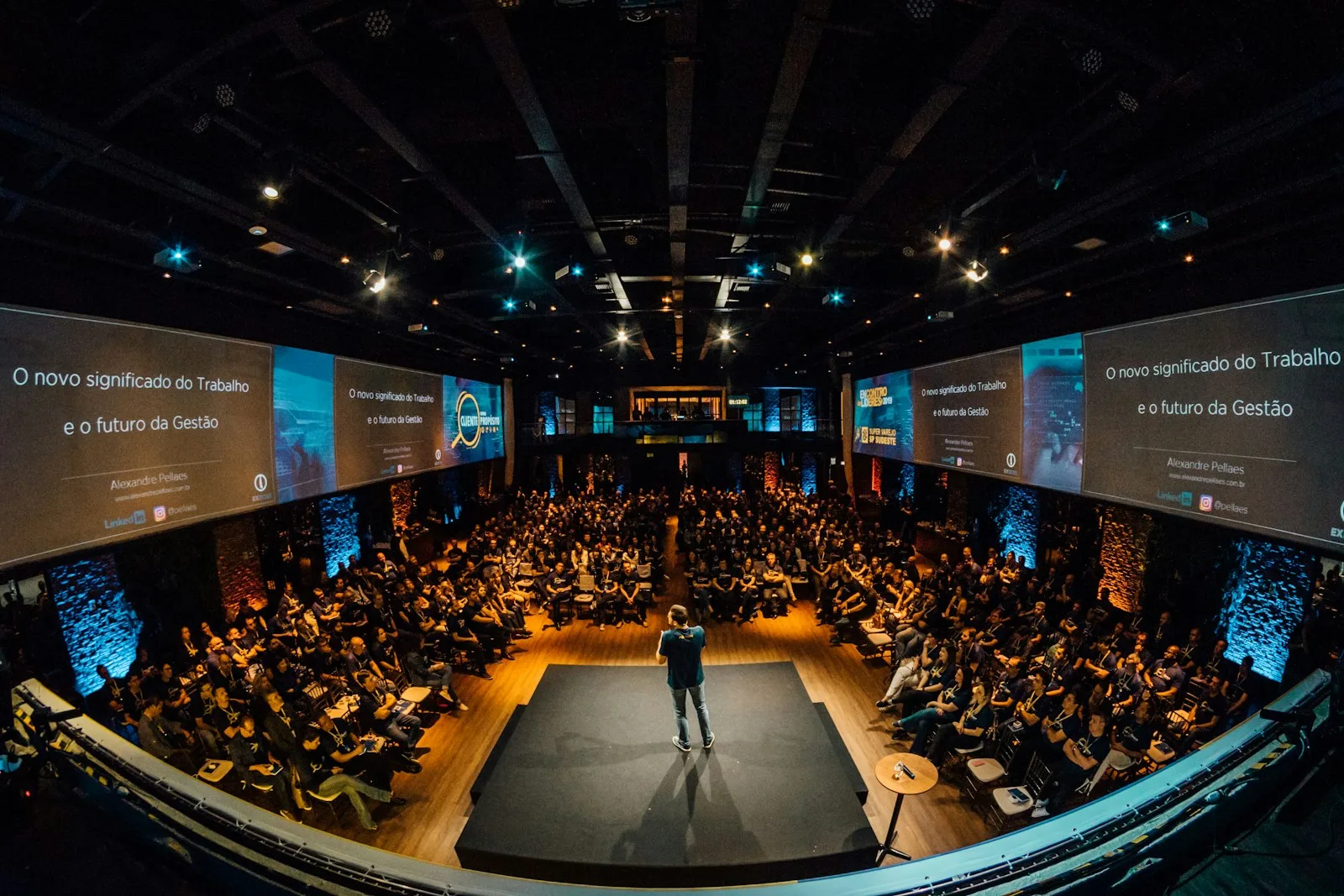
Modern hybrid events are produced as small television broadcasts. A vision mixer sits in a control area with multiple camera feeds, the program feed to the room screens, a graphics playout for lower thirds and titles, and a stream encoder pushing to the destination platform.
That entire chain is separate from the photography and video recording crew. It runs on its own signal path, its own audio and its own operator schedule.
Remote speakers are treated as another camera
Speakers joining remotely are routed into the vision mixer as another source, ideally via a low-latency link (NDI, SRT, a dedicated remote-guest platform) rather than a consumer video call. The mixer cuts to them like any other camera and their audio is mixed with the room feed.
For high-profile remote keynotes, plan a dedicated technical rehearsal one or two days before the event to test link stability, camera framing, backdrop and audio.
Post-event assets need to be planned in advance
The stream is a live asset. The post-event assets — session recordings for the client portal, short social edits, a highlight video, a press-ready gallery — are separate deliverables that must be planned before the show, or they will not exist afterwards.
The single biggest failure mode we see is teams assuming the stream recording is the post-event video. It rarely is. Broadcast masters are long, unedited, and full of live-mix idiosyncrasies. Post-event assets need their own edit pass.
Budget implications
Hybrid production adds a broadcast layer on top of a normal event video budget: mixer, encoder, dedicated operator, streaming platform fees, and a technical rehearsal. Reasonable ranges in Spain: €3,000–€6,000 additional for a single-stage half-day stream, €6,000–€12,000 for a full-day multi-source stream. Under those numbers you are probably compromising on link reliability, which is the wrong thing to compromise on for a live audience.
Have an event or corporate content project? Let's talk.
Request a quote →